

Timber and aluminium are the two most common window frames in Melbourne homes, and most people weighing up new or replacement windows end up choosing between them. Both can look great and both can last. The real differences are in how much care they need, how they cope with our weather, and how you want your home to look in twenty years.
We have been making aluminium windows and doors in Melbourne for more than 25 years, so you know which side we are on. We have tried to keep this comparison fair anyway, because the right frame is the one that suits your home and the way you live.
Aluminium and timber at a glance
| Aluminium | Timber | |
|---|---|---|
| Upkeep | A wash with mild soapy water every few months | Repainting or re-oiling every few years |
| Weather | Will not rot, warp or swell | Can rot, swell or warp once the finish wears; termites are a risk |
| Energy efficiency | Depends on the glass and frame system; rated as a whole window under WERS | A natural insulator, though the glass still does most of the work |
| Look | Clean, slim, modern lines | Warm natural grain, suits period and heritage homes |
| Frame size | Strong enough for slim frames and large panes | Thicker frames for the same opening |
| Colour | Baked-on powdercoat in a wide range of colours | Any paint colour, but it needs repainting to keep it |
Maintenance: the biggest practical difference
Timber is a natural material, and it behaves like one. Its paint or oil finish protects it from sun and rain, and once that finish wears through, moisture gets in. That is when frames start to swell, stick, rot or warp. Keeping timber windows in good condition usually means sanding and repainting or re-oiling every few years, and more often on walls that face the afternoon sun or the sea.
Powdercoated aluminium does not need repainting. The colour is a baked-on finish, so routine care is a wash with warm water and a mild detergent every few months, keeping the tracks and drainage holes clear, and a light spray of dry silicone on locks and rollers once a year. Our maintenance guide covers the full routine.
Coping with Melbourne weather
Melbourne can give a window four seasons in a day. Timber moves as it takes on and loses moisture, which is why old timber sashes rattle in winter and stick in summer. Aluminium keeps its shape and fit all year, and it will not rot or attract termites.
On the Mornington Peninsula and along the bay, salt air is the main enemy of any window frame. Aluminium with a quality powdercoat handles it well as long as it is washed regularly. If you live within a few kilometres of the coast, wash your frames more often to stop salt building up.
Energy efficiency: a fair comparison
This is where timber has a genuine head start. Timber is a natural insulator, while aluminium conducts heat, so on its own an aluminium frame lets more heat through than a timber one.
In most windows, though, the glass covers far more area than the frame, so the glass you choose usually makes a bigger difference than the frame material. Modern aluminium windows close the gap with double glazing and quality seals.
The fairest way to compare two windows is their energy rating. Every M.C.G window is rated under the Window Energy Rating Scheme (WERS), which measures the frame and glass together rather than the glass alone. Ask for the rating of the exact window you are considering, in either material, and compare like with like. Our WERS guide explains how the ratings work.
Look and style
Timber suits period homes, Californian bungalows and anywhere the natural grain is part of the character. If your home is under a heritage overlay, check with your council before you change anything, as some overlays have rules about replacement window materials and styles.
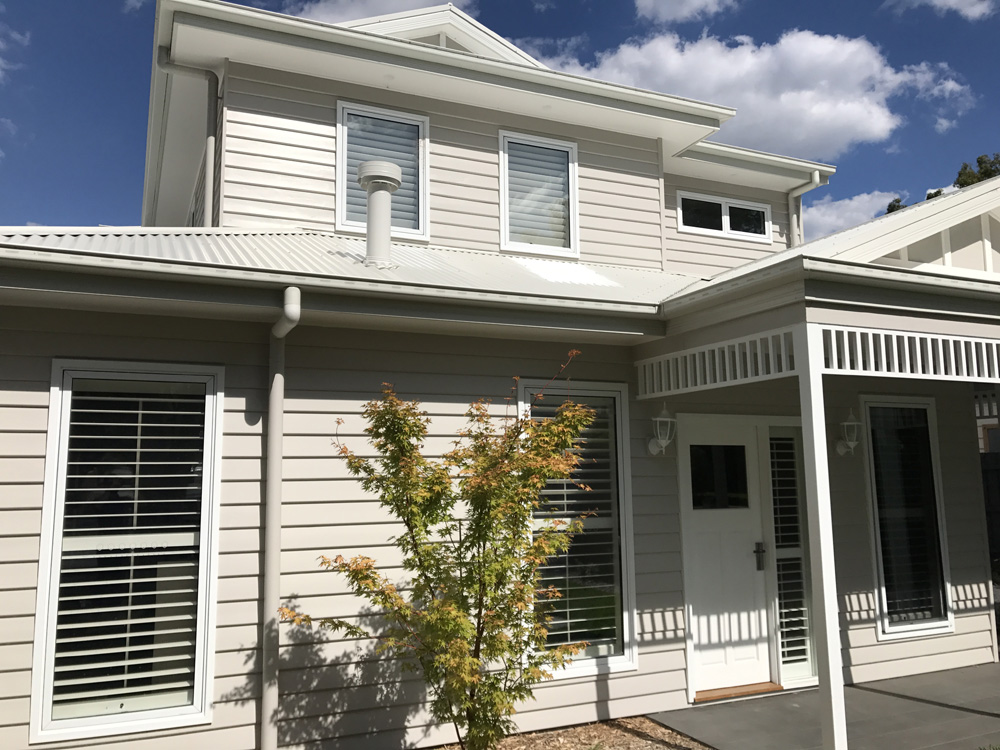
Aluminium suits contemporary homes and renovations that want slim sightlines and more glass. Because aluminium is so strong, the frames can be slimmer for the same opening, which means more glass and more light. It also suits modern styles such as sashless windows, which reduce the horizontal rail to a single slim line.
Our powdercoat range covers popular colours such as Monument, Woodland Grey, Surfmist and Black, with more on request. The Textura finishes have a fine, low-sheen texture that hides minor marks. You can see them all on our colour chart.
How long do aluminium windows last?
Well-made aluminium windows that are kept clean last for decades. The frame will not rot, and the powdercoat protects it from the weather. The parts that wear over time are the moving ones, such as rollers, seals and locks, and these can usually be adjusted or replaced without replacing the window.
Timber windows can also last a very long time, as plenty of Melbourne’s older homes show, but only if the finish is kept up. Once moisture gets into neglected timber, it can deteriorate quickly.
Our replacement windows carry a 7-year warranty, with a 12-month warranty on moving parts.
What about cost?
Prices vary with the size and style of the window, the glass and the frame system, so the only accurate comparison is a quote for your actual windows. When you compare, look at the cost over the life of the window as well as the price today. Timber’s repainting adds up over the years, while the ongoing cost of aluminium is mostly a bucket of soapy water.
Replacing timber windows with aluminium
Swapping old timber windows for aluminium is one of the most common jobs we do. We remove the timber frame, make an aluminium window to suit the opening at our Croydon South factory and finish it neatly inside and out. Because every window is made to measure, you get a precise fit rather than a standard size packed out to fit the hole.
Here is how it works:
- Free consultation and quote. A consultant visits your home, takes sizes and talks you through the options. We then send you a written quote.
- Check measure. Once you go ahead, a service technician measures every opening precisely.
- Made to order. Your windows are made at our factory, typically in about 5 weeks from the check measure.
- Installation. Our own team removes the old windows and installs the new ones. Most homes can be occupied while the work is done.
Find out more about our aluminium window replacement service.
So which should you choose?
Choose timber if the natural look matters most to you, your home’s character calls for it or a heritage overlay requires it, and you are happy to keep up the painting.
Choose aluminium if you want low maintenance, slim modern frames, a wide colour choice, and a frame that will not rot, warp or need repainting.
Whichever way you lean, compare like with like. Ask for the WERS rating of the exact window, and think about the upkeep over the next twenty years, not just the price today.
Frequently asked questions
Are aluminium windows better than timber?
It depends on what matters most to you. Aluminium needs far less maintenance, will not rot or warp, and allows slimmer frames and larger glass. Timber is a natural insulator and suits period homes. For energy efficiency, compare the WERS rating of the whole window rather than the frame material.
Do aluminium windows need maintenance?
A little. Wash the frames with warm water and a mild detergent every few months, keep the tracks and drainage holes clear, and lubricate locks and rollers with a dry silicone spray once a year. They do not need repainting.
Can you replace timber windows with aluminium?
Yes. Replacing old timber windows with aluminium is one of the most common jobs we do. We remove the timber frame, make an aluminium window to suit the opening and finish it neatly inside and out.
How long do aluminium windows last?
Well-made aluminium windows that are kept clean last for decades. The moving parts, such as rollers and seals, may need adjusting or replacing over time, but the frame itself will not rot.
Book a free consultation
Thinking about replacing your windows? Book a free consultation and quote. A consultant will visit your home anywhere across Melbourne or the Mornington Peninsula, or you can call us on 1300 766 349. You are also welcome to visit our showrooms in Croydon South and Mornington to see the frames and finishes in person.